The inbox is no longer a guessing game. In 2026, AI email marketing tools have evolved far beyond basic "write me a subject line" prompts. They now predict who will buy, when they'll open your message, and what offer will push them over the edge — all without a marketer lifting a finger.
But here's the tension most guides won't tell you: the gap between what AI email tools promise and what they actually deliver has never been wider. Some platforms slap a ChatGPT wrapper on a text box and call it "AI-powered." Others are genuinely rewriting how email campaigns get built, tested, and optimized.
This guide cuts through the noise. (For personalized tool recommendations based on your business needs, try Find Software.) We'll cover the real AI capabilities shipping in today's email marketing platforms, the measurable performance gains you can expect, and the human oversight you still can't skip — no matter how good the algorithms get.
What "AI" Actually Means in Email Marketing Right Now
Before diving into tools, it's worth understanding the three tiers of AI that exist across the email marketing landscape in 2026.
Tier 1: Generative AI (Content Creation). This is the most common — and least differentiated — form of AI in email marketing. Nearly every major platform now offers an AI writing assistant that generates subject lines, body copy, and CTAs from a prompt. The underlying technology is usually a large language model (OpenAI, Anthropic, or a fine-tuned open-source model). The output quality is broadly similar whether you use it inside Mailchimp, Brevo, Constant Contact, or a standalone tool like Jasper. It's useful for beating writer's block but rarely a strategic advantage on its own.
Tier 2: Predictive AI (Optimization). This is where platforms start to differentiate. Predictive AI analyzes your historical campaign data — opens, clicks, conversions, purchase behavior — and makes decisions about when to send, who to target, and which variant to pick. ActiveCampaign's Active Intelligence, Klaviyo's predictive analytics, and Brevo's predictive sending all fall here. The value compounds over time because these systems learn from your specific audience, not just generic benchmarks.
Tier 3: Agentic AI (Autonomous Workflows). The newest tier, still emerging. Agentic AI tools don't just suggest — they act. They research prospects, draft personalized outreach based on real-time signals (like a LinkedIn post or a funding announcement), and execute multi-step campaigns with minimal human input. Tools like Sai and Instantly's AI Copilot are pushing into this territory, particularly for outbound sales email.
Most email marketers in 2026 are working primarily in Tiers 1 and 2. Tier 3 is growing fast but still requires careful oversight, which we'll cover later.
AI Content Generation: Beyond the Blank Page
Every major email platform now includes some form of AI content generation. The question isn't whether it exists — it's whether it's any good.
How it works: You provide a prompt (product name, audience, goal, tone) and the AI generates email copy — subject line, preheader, body text, and call to action. Most platforms also let you specify length, formality, and brand voice.
Where it genuinely helps: AI content generation shines in three scenarios. First, producing high volumes of variant copy for A/B testing — generating ten subject line options in thirty seconds instead of brainstorming for an hour. Second, maintaining consistency across large teams where multiple people write emails. Third, overcoming the blank-page problem when you know what you want to say but can't find the right words.
Where it falls short: The output from most built-in AI writers is competent but generic. One experienced reviewer noted that standalone writing tools like Jasper produced noticeably higher quality than what Mailchimp or ActiveCampaign's built-in AI generated, particularly when it came to maintaining a specific brand voice across multiple variants. The built-in tools tend to produce safe, middle-of-the-road copy that reads like every other marketing email in your recipient's inbox.
AI email marketing tools: feature comparison
Side-by-side comparison of AI capabilities across 8 major platforms. Filter by category or sort by column. For deeper analysis, see marketing automation reviews on UseReviews.
| Platform ▲ | AI content gen | Subject line AI | Send time AI | Predictive analytics | AI segmentation | A/B testing | Starting price ▲ | Best for |
|---|---|---|---|---|---|---|---|---|
| ActiveCampaign | Brand kit | Full | Per-contact | Active Intelligence | Auto-suggest | Sequences | $15/mo | Automation-first teams |
| Brevo | Aura agent | Full | Predictive | Standard | NLP (enterprise) | Full | $9/mo | SMBs, budget-conscious |
| Klaviyo | Standard | Full | Per-contact | CLV + churn | Predictive | Multi-element | $20/mo | E-commerce retention |
| GetResponse | Full campaign gen | Full | Workflows | Standard | Behavioral | Full | $19/mo | All-in-one campaigns |
| Mailchimp | Content optimizer | Full | Per-contact | Predictive seg. | Predictive | Standard | $13/mo | Small businesses |
| Constant Contact | Basic gen | Std plan+ | None | None | Manual | Subject only | $12/mo | Beginners, events |
| Omnisend | Product-aware | Full | Per-contact | Product rec. | Behavioral | Full | $16/mo | Shopify stores |
| Instantly | AI Copilot | Full | Deliverability | Reply intent | Lead filters | Sequence | $30/mo | Cold outreach |
| Jasper | Best-in-class | Full | N/A | N/A | N/A | N/A | $49/mo | AI copywriting |
Pricing reflects entry-level paid plans for ~1,000 contacts as of April 2026. Verify current pricing on each vendor's site. Feature ratings based on hands-on testing and user review analysis.
Platform comparison for content generation:
- GetResponse has leaned heavily into end-to-end AI campaign creation. You answer a few questions about your goals and branding, and the platform generates landing pages, autoresponder series, and newsletters — all aligned with your campaign. It's ambitious, though the output still needs human refinement.
- Brevo recently launched Aura, an AI marketing agent accessible from any page in the dashboard. It generates subject lines, email copy, and can even build audience segments from plain-language descriptions.
- Constant Contact offers an AI content generator that drafts emails, social posts, and text messages from prompts. Its multi-channel campaign builder can produce a six-step campaign including emails, webinars, and social series — a useful starting point that still requires editing.
- ActiveCampaign includes an AI brand kit that generates email templates styled to match your brand's visual identity automatically, going beyond just copywriting.
- Mailchimp bundles an AI content optimizer that suggests subject line and body copy adjustments based on your specific audience's engagement data, plus a Creative Assistant for layout and image suggestions.
The honest take: If you're already comfortable with ChatGPT or Claude, the built-in AI writers in most email platforms won't blow you away. Their real value is convenience — generating copy without leaving your workflow. For higher-quality output, dedicated AI writing tools or direct use of LLMs with well-crafted prompts still produce better results.
Subject Line Optimization: Where AI Earns Its Keep
If there's one area where AI has delivered undeniable, measurable results in email marketing, it's subject line optimization. This is the feature most likely to justify the cost of an AI-powered platform upgrade.
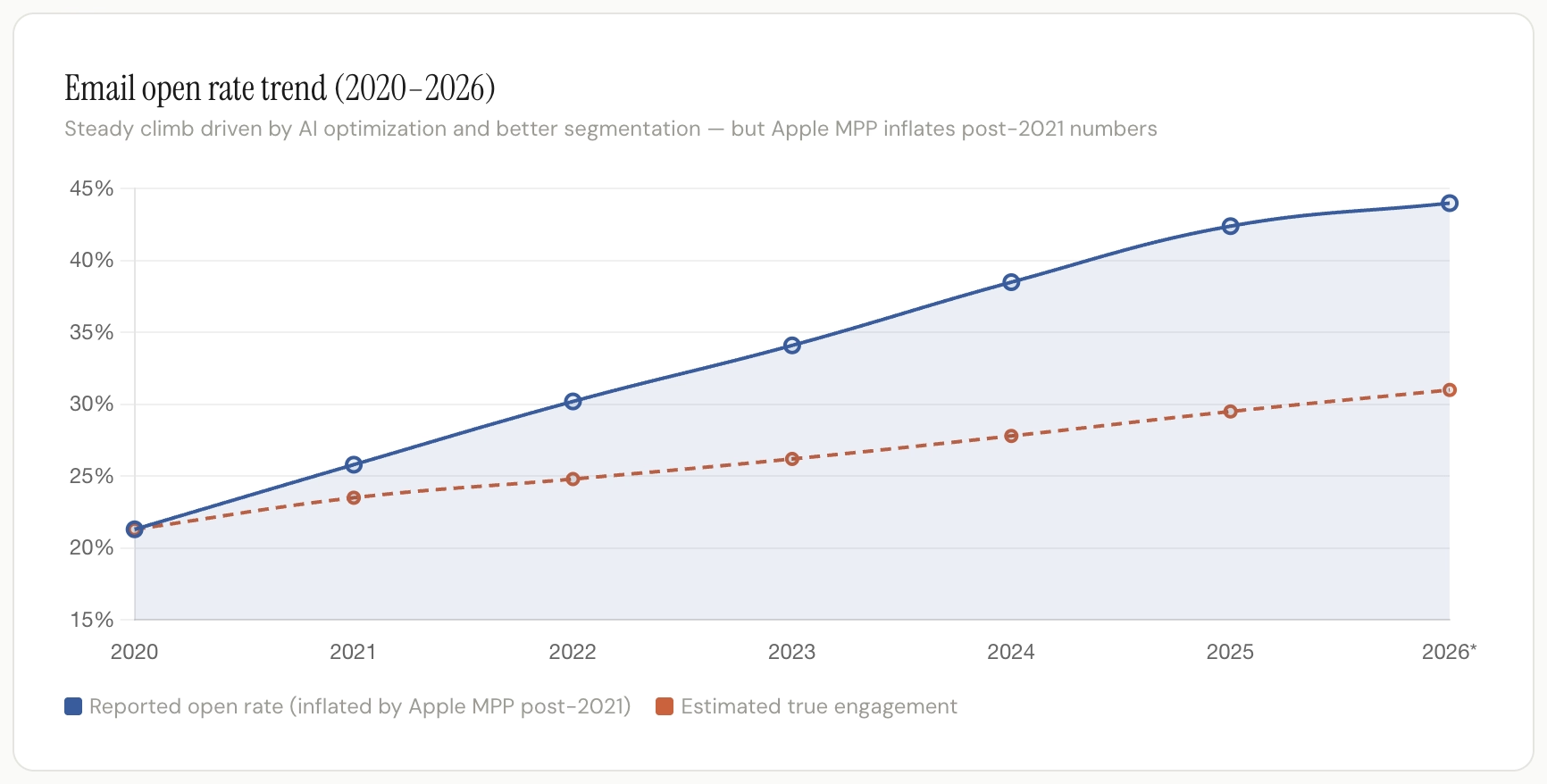
The data is compelling. Across benchmarks from major platforms in early 2026, brands using AI-powered subject line optimization are seeing open rate improvements ranging from meaningful to dramatic — with the size of the lift depending heavily on how optimized their subject lines were before AI entered the picture. Brands that were already running sophisticated testing see smaller (but still significant) gains, while those sending generic, untested subject lines see the largest improvements.
What AI does differently than manual testing: Traditional A/B testing compares two subject lines head-to-head. AI-powered multivariate testing evaluates five to ten variants simultaneously, analyzing emotional tone, word choice, length, personalization tokens, and emoji usage. The key advantage is that multivariate testing can isolate which specific element drives opens — is it the urgency word, the emoji, the personalization, or the character count? — rather than comparing complete subject lines as opaque units.
Practical insights from 2026 data:
- Subject lines between 28 and 50 characters perform best on mobile, which now accounts for roughly 68% of email opens. AI tools can automatically trim and reformat to hit this window.
- Personalization in subject lines has moved beyond first-name tokens. AI-powered personalization now draws on behavioral data, purchase history, and engagement patterns to craft subject lines that feel individually relevant.
- Urgency and surprise triggers lose effectiveness when overused. If you send urgency-based subject lines more than twice per month to the same audience, engagement declines. AI systems that track trigger frequency and rotate between categories maintain effectiveness better than manual approaches.
Which platforms do this best: ActiveCampaign and Klaviyo stand out for subject line optimization because their AI learns from your data specifically, not just generic models. Mailchimp's Content Optimizer also does well here, particularly for small businesses with enough historical campaign data. Omnisend's AI understands product catalogues, giving it an edge for e-commerce subject lines that reference specific items.
Measured AI impact on email marketing KPIs
Aggregated data from industry benchmarks, platform reports, and real user reviews — 2025–2026 reporting period.
These benchmarks change fast. UseReviews continuously tracks what real users say about email platform performance — so you can see which tools actually deliver on AI promises.
See live review intelligence →Sources: Klaviyo 2026 Benchmarks, Omnisend 2026 Statistics Report, MailerLite Benchmark Data, McKinsey AI Marketing Analysis, Statista Email Users 2025, SQ Magazine Email Statistics. For how product teams use review data to validate tool claims, visit usereviews.io.
Send Time Optimization: The Quiet Revenue Driver
Send time optimization is one of those features that sounds minor but compounds into serious revenue impact over months. Instead of blasting your entire list at 10 AM on Tuesday because a blog post once said that was the best time, AI analyzes when each individual subscriber typically opens emails and delivers at their personal optimal moment.
How the numbers stack up: AI-optimized send times consistently lift open rates compared to batch-sending at a fixed time. The gains come from a simple mechanism — emails arrive at the top of the inbox precisely when each subscriber is most likely to check. The effect is strongest for audiences spread across multiple time zones or with highly variable engagement patterns.
How different platforms implement it:
- Brevo's predictive sending analyzes recipient engagement history to determine optimal delivery windows for each contact. It's available on paid plans and works across both marketing and transactional emails.
- ActiveCampaign analyzes engagement data per contact and determines when each individual is most likely to open. This integrates directly with their automation builder, so triggered sequences can also benefit from optimized timing.
- Omnisend and Klaviyo both offer per-recipient send time optimization, with Klaviyo's implementation particularly strong for e-commerce workflows where purchase timing patterns add another data dimension.
- GetResponse includes send time optimization in its automation workflows, though it requires enough historical data per contact to be effective — newer lists may not see immediate benefits.
What to watch for: Send time optimization requires a critical mass of engagement data to work. If a contact has only received two emails from you, the system doesn't have enough signal to predict their optimal window. Most platforms need at least 4-8 weeks of sending history per contact before predictions become reliable.
Predictive Analytics and AI-Powered Recommendations
Predictive analytics is where AI moves from "helping you write faster" to "telling you things you didn't know about your audience." These features analyze behavioral patterns to forecast future actions — who's about to churn, who's ready to buy, which contacts will never engage again.
Klaviyo leads the pack here for e-commerce businesses. Its predictive analytics surface metrics like expected customer lifetime value, churn risk, and predicted next order date. The data from their 2026 benchmarks tells the story: automated email flows generate nearly 41% of total email revenue from just 5.3% of sends, with revenue per recipient roughly 18 times higher than standard campaigns. AI product recommendations within those flows lift click rates to 3.75% on average, with top performers hitting 8.79%.
ActiveCampaign's Active Intelligence continuously analyzes data points to suggest next steps — recommending subject lines, identifying high-value segments, and flagging contacts whose engagement patterns suggest they're about to disengage. It integrates directly with their CRM, so sales teams can see which marketing signals matter.
Mailchimp's predictive segmentation identifies which contacts are most likely to convert, allowing you to prioritize sends and budget. For small businesses running lean, this is genuinely useful — it surfaces insights that would otherwise require a dedicated analyst.
HubSpot combines email predictions with its CRM data, letting marketing and sales see the same engagement signals. Smart send time features look at individual open patterns, and segmentation works through lifecycle stage, lead score, and behavioral filters. The downside is that the deepest AI features live behind expensive tiers.
Where predictions go wrong: Predictive models are only as good as the data feeding them. If your list has significant data quality issues — lots of inactive contacts, inconsistent tracking, or poor segmentation hygiene — AI predictions will reflect those problems. Garbage in, garbage out remains true even with sophisticated machine learning.
AI-Powered Personalization: Beyond "Hi {First_Name}"
The biggest shift in email marketing over the past two years has been the move from template-based personalization (merge tags) to AI-driven contextual personalization. The difference is substantial.
Merge tag personalization inserts known data points — name, company, location — into fixed template positions. It's table stakes, not a differentiator.
AI-driven personalization adapts entire sections of an email based on behavioral signals. Product recommendations change based on browsing history. The hero image swaps based on past purchase categories. The CTA shifts based on where the contact sits in their buyer journey. The email's angle adjusts based on role, industry, or intent signals.
For e-commerce: Klaviyo and Omnisend both excel at dynamic product recommendations powered by AI. Omnisend's AI understands your product catalogue and can generate recommendations tuned to individual browsing and purchase behavior. Klaviyo's benchmarks show that emails with AI product recommendations drive materially higher revenue per recipient than those without.
For B2B and SaaS: The personalization frontier is outbound. Tools like Instantly and Sai research each prospect's LinkedIn activity, company news, and recent content before drafting a single email. This level of context requires an agent that can browse the web and pull real-time data — not just a template engine. It's still early-stage and requires significant human review, but the direction is clear.
For lifecycle marketing: ActiveCampaign and Brevo offer behavioral personalization within automation flows. Contacts who click on pricing-related links get different follow-ups than those who engage with educational content. AI determines the branching logic based on predicted conversion probability rather than simple if/then rules.
Consumer sentiment on AI personalization: Acceptance is growing but not universal. Recent data shows roughly 36% of consumers actively like AI-generated content in emails, 39% feel indifferent, and 25% don't like it. The takeaway: AI personalization works best when it's invisible — when the recipient feels the email was crafted for them, not when it reads like a robot wrote it.
Image Generation for Emails
AI image generation has entered email marketing, but with significant caveats. Several platforms now offer the ability to generate or customize images within the email builder, reducing reliance on stock photography or design teams.
Mailchimp's Creative Assistant uses generative AI to suggest email layouts and image placements based on your brand assets. It can generate variations of visual themes to test different aesthetics.
ActiveCampaign's AI brand kit takes your brand colors, fonts, and logo to automatically generate email templates that match your visual identity — useful for maintaining consistency without a designer.
Standalone tools like Jasper pair AI copywriting with image generation capabilities, letting you create both the copy and visuals for a campaign in one workflow.
The limitations are real: AI-generated images for email face two practical problems. First, email clients render images inconsistently — what looks sharp in a browser may display poorly in Outlook or on older mobile clients. Second, the quality of AI-generated marketing visuals isn't yet reliable enough for brand-sensitive use cases. Most teams use AI image generation for internal drafts and ideation, then hand off to a designer for final production assets.
The practical approach in 2026: Use AI image generation for rapid prototyping and A/B test concepts. Reserve final production imagery for human designers or curated stock photography, especially for brand-critical campaigns.
AI-Assisted Segmentation: Smarter Audiences, Less Manual Work
Segmentation is the single most impactful lever in email marketing. Segmented campaigns generate significantly more opens and click-throughs compared to unsegmented sends, and the vast majority of marketers say segmentation is their most effective tactic. AI is making segmentation faster and smarter.
Traditional segmentation requires manually building rules: "contacts who purchased in the last 30 days AND opened 3+ emails AND are located in the US." This works, but it's labor-intensive and static.
AI-powered segmentation works in two ways. First, some platforms now accept natural language descriptions of the audience you want to reach — type "customers who bought running shoes in Q1 but haven't purchased since" and the AI builds the segment automatically. Second, predictive segmentation identifies high-value segments you didn't think to create — clusters of contacts with similar behavior patterns that correlate with conversion.
Platform implementations:
- Brevo's AI segmentation (launched late 2024) lets you describe the contacts you want in plain language, and the AI builds the segment using machine learning. It's a powerful feature, though currently limited to enterprise plan subscribers.
- ActiveCampaign suggests high-impact segments automatically — likely repeat buyers, at-risk subscribers, high-engagement contacts — based on behavioral data. You don't have to tag every contact manually.
- Mailchimp's predictive segmentation identifies which contacts are most likely to convert and groups them accordingly. Useful for prioritizing limited send volumes or promotional budgets.
- Klaviyo segments based on predicted customer lifetime value, expected next purchase date, and churn probability — metrics that are particularly valuable for e-commerce brands focused on retention.
The practical impact: AI segmentation doesn't replace understanding your audience. It accelerates the process of translating that understanding into actionable groups. The biggest win is surfacing segments you didn't know existed — behavioral patterns that correlate with high-value outcomes but don't map neatly to the demographic categories you'd think to filter by.
Spam Score Prediction and Deliverability
Deliverability is the foundation everything else sits on. If your emails land in spam, none of the AI copywriting, personalization, or send time optimization matters.
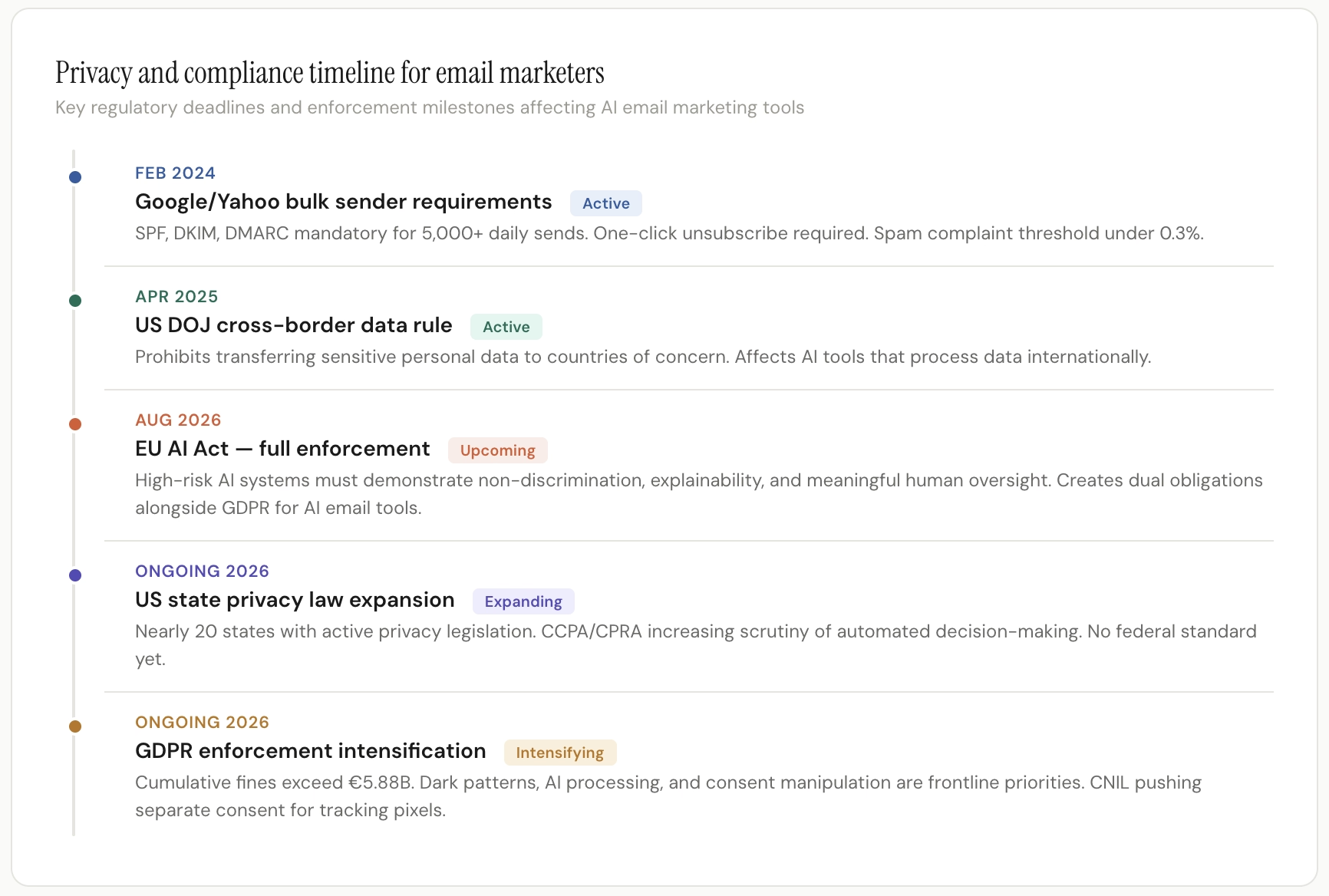
The deliverability landscape in 2026 has tightened significantly. Google and Yahoo's 2024 authentication requirements raised the baseline — SPF, DKIM, and DMARC are now effectively mandatory for bulk senders, not optional best practices. Despite this, adoption remains incomplete, creating deliverability risks for non-compliant senders.
AI's role in deliverability:
- Pre-send spam score prediction: Several platforms now analyze your email content, subject line, and sending patterns against spam filter criteria before you hit send, flagging likely issues. SendGrid (by Twilio) focuses heavily on this with real-time deliverability insights.
- Engagement-based throttling: AI monitors per-recipient engagement and automatically reduces frequency for contacts showing declining interest, preventing the spam complaints that damage sender reputation.
- List hygiene recommendations: Platforms like Brevo and ActiveCampaign use AI to identify contacts who are unlikely to ever engage again, recommending removal before they drag down your metrics.
The numbers: Average email deliverability sits at approximately 84.6% across all senders, with hard bounce rates around 0.34%. Marketers who regularly clean their lists see substantially higher deliverability than those who don't. AI-driven spam filters have helped reduce false positives by about 22%, improving inbox placement accuracy overall.
Authentication requirements: Every reputable email marketing platform now supports SPF, DKIM, and DMARC setup. Constant Contact provides step-by-step guides within the platform. Brevo claims a 99% delivery rate backed by dedicated SMTP infrastructure. If your current platform doesn't make authentication setup straightforward, that alone is a reason to switch.
Automated A/B Testing With AI
Traditional A/B testing is limited by human patience. You test two subject lines, wait for statistical significance, pick the winner, and move on. AI-powered testing compresses this cycle and expands its scope.
What AI changes about A/B testing:
- Multivariate testing at scale: Instead of testing two options, AI evaluates five to ten variants simultaneously — different subject lines, preview text, send times, and content blocks — and identifies winning combinations faster.
- Auto-optimization: Some platforms automatically send the winning variant to the remaining audience once statistical significance is reached, without manual intervention. This is particularly useful for time-sensitive campaigns where waiting for results means missing the window.
- Continuous learning: The best implementations carry learnings forward. If emotional subject lines outperform informational ones for your audience, the AI applies that insight to future variant generation automatically.
Platform-specific notes:
- ActiveCampaign offers split testing within automation workflows, letting you test not just email content but entire automation sequences — different paths, timing, and follow-up strategies.
- Brevo includes A/B testing from the Standard plan ($18/month), covering subject lines and content variants with performance analytics.
- Constant Contact limits A/B testing to subject lines only, and only on the Standard tier ($35/month) or higher. This is a notable limitation compared to competitors.
- GetResponse includes A/B testing on all paid plans, covering subject lines, content, and send times.
The honest limitation: A/B testing — even AI-powered — requires volume. If you're sending to a list of 500 contacts, there isn't enough data for statistically meaningful results. Most platforms need at least 1,000+ recipients per variant to produce reliable winners. Smaller lists benefit more from AI-generated variant suggestions than from automated testing optimization.
Natural Language Reporting and Analytics
One of the quieter but genuinely useful applications of AI in email marketing is natural language reporting — the ability to ask questions about your campaign performance in plain English and get answers without building custom reports.
Brevo's Aura agent can answer questions about campaign performance directly within the dashboard. Instead of navigating to analytics, filtering by date range, and comparing metrics manually, you can ask "how did my welcome series perform last month compared to the previous month?" and get a synthesized answer.
HubSpot integrates AI-powered reporting across its marketing hub, letting you surface insights about email performance alongside CRM data, website analytics, and ad performance.
Klaviyo provides automated insights about campaign and flow performance, highlighting anomalies and trends that might otherwise go unnoticed in raw data.
What this means practically: Natural language reporting reduces the analytics skill barrier. Marketing managers who aren't comfortable building pivot tables or filtering dashboards can now access the same insights as data-savvy teammates. The risk is over-reliance — AI summaries sometimes miss nuance that a careful human analyst would catch, particularly around statistical significance and confounding variables.
Pricing for AI Features: What You'll Actually Pay
AI features in email marketing fall along a predictable pricing spectrum. Here's what the major platforms charge in 2026:
Free tiers with basic AI:
- Brevo: Free plan includes 300 emails/day to unlimited contacts with basic AI content generation. Paid plans start at $9/month.
- Mailchimp: Free tier for up to 500 contacts with basic AI content suggestions. Paid plans from $13/month.
- GetResponse: Free plan for up to 500 contacts and 2,500 emails/month. AI tools limited to 3 uses on the Starter plan ($19/month).
Mid-tier with meaningful AI:
- ActiveCampaign: Plans from $15/month (Starter). Active Intelligence and AI-powered automation available on higher tiers. Widely considered the best value for automation-focused marketers.
- Brevo Standard: $18/month unlocks A/B testing, full marketing automation, and advanced analytics.
- GetResponse Marketer: $59/month for unlimited marketing automation and AI-powered features.
- Constant Contact Standard: $35/month for A/B testing, AI content suggestions, and automation workflows.
Premium/Enterprise AI:
- Brevo Professional: $499/month adds AI segmentation, WhatsApp campaigns, push notifications, and dedicated analytics.
- Klaviyo: Paid plans from $20/month for 500 contacts, scaling with list size. Predictive analytics available on all paid plans.
- HubSpot Marketing Hub: Free tools available, but meaningful AI features require Professional ($800+/month) or Enterprise tiers.
- Constant Contact Premium: $80/month for unlimited automation and custom segments.
The value calculation: For a full breakdown of what email marketing really costs, see this cost analysis on UseReviews. For most small to mid-size businesses, ActiveCampaign or Brevo offer the strongest AI-to-price ratio. GetResponse provides good value for teams that want end-to-end AI campaign generation. Constant Contact charges premium prices for mid-tier features — you can get more AI capability for less money elsewhere. Klaviyo is the clear choice for e-commerce, where its product-catalog-aware AI justifies the per-contact pricing. HubSpot makes sense only if you're already invested in their CRM ecosystem.
AI email marketing tools: pricing breakdown
What you'll actually pay for AI features across major platforms. All prices for ~1,000 contacts, monthly billing, April 2026. For review-based comparisons of value and satisfaction, see the email marketing cost breakdown on UseReviews.
Price only tells half the story. UseReviews shows you what real users think about each platform's AI features — satisfaction ratings, common complaints, and feature gaps from thousands of reviews.
Analyze real user reviews →Pricing verified April 2026. Plans scale with contact count — prices shown are for ~1,000 contacts. Annual billing typically saves 15–30%. HubSpot Professional shown at 1,000 marketing contacts. Visit vendor sites for current pricing. Value scores reflect editorial assessment; see usereviews.io for user-generated ratings.
Accuracy and Reliability: How Much Can You Trust AI Output?
This is the section most vendor-produced guides skip entirely.
Content generation accuracy: AI-generated email copy is fluent but not always factually accurate. It can fabricate product details, invent statistics, or attribute features to your product that don't exist. Every piece of AI-generated content needs fact-checking before it goes out. This isn't a flaw that will be fixed next quarter — it's a fundamental characteristic of how large language models work.
Prediction accuracy: Send time optimization and predictive segmentation have measurable accuracy that improves with data volume. These features work well when they have 8+ weeks of engagement data per contact. With less data, predictions are essentially educated guesses. Platforms rarely disclose their prediction accuracy rates, so treat initial results with appropriate skepticism.
Subject line optimization accuracy: This is where AI performs most reliably. Subject line testing generates fast feedback loops — you can verify predictions within hours of sending. The iterative nature means even imperfect predictions quickly converge on better-performing options.
Segmentation accuracy: AI-generated segments based on behavioral data are generally reliable. Segments based on predicted intent (e.g., "likely to churn") are less certain and should be validated against actual outcomes before you build major campaigns around them.
The honest summary: AI in email marketing is most accurate for tasks with fast feedback loops (subject lines, send times) and least accurate for open-ended content generation and long-range predictions. Calibrate your trust accordingly.
Human Oversight: What You Still Can't Automate Away
Even the most advanced AI email marketing tools require human oversight. Here's where human judgment remains non-negotiable:
Brand voice and tone. AI can approximate your brand voice, especially with brand kits and voice training features. But it can't catch the subtle difference between "casual and approachable" and "trying too hard to be cool." A human editor who understands your brand catches these mismatches instantly.
Strategic decisions. AI can tell you what is performing well. It can't tell you why it matters or whether you should care. A campaign that generates high open rates but attracts the wrong audience segment isn't a success, no matter what the AI dashboard says.
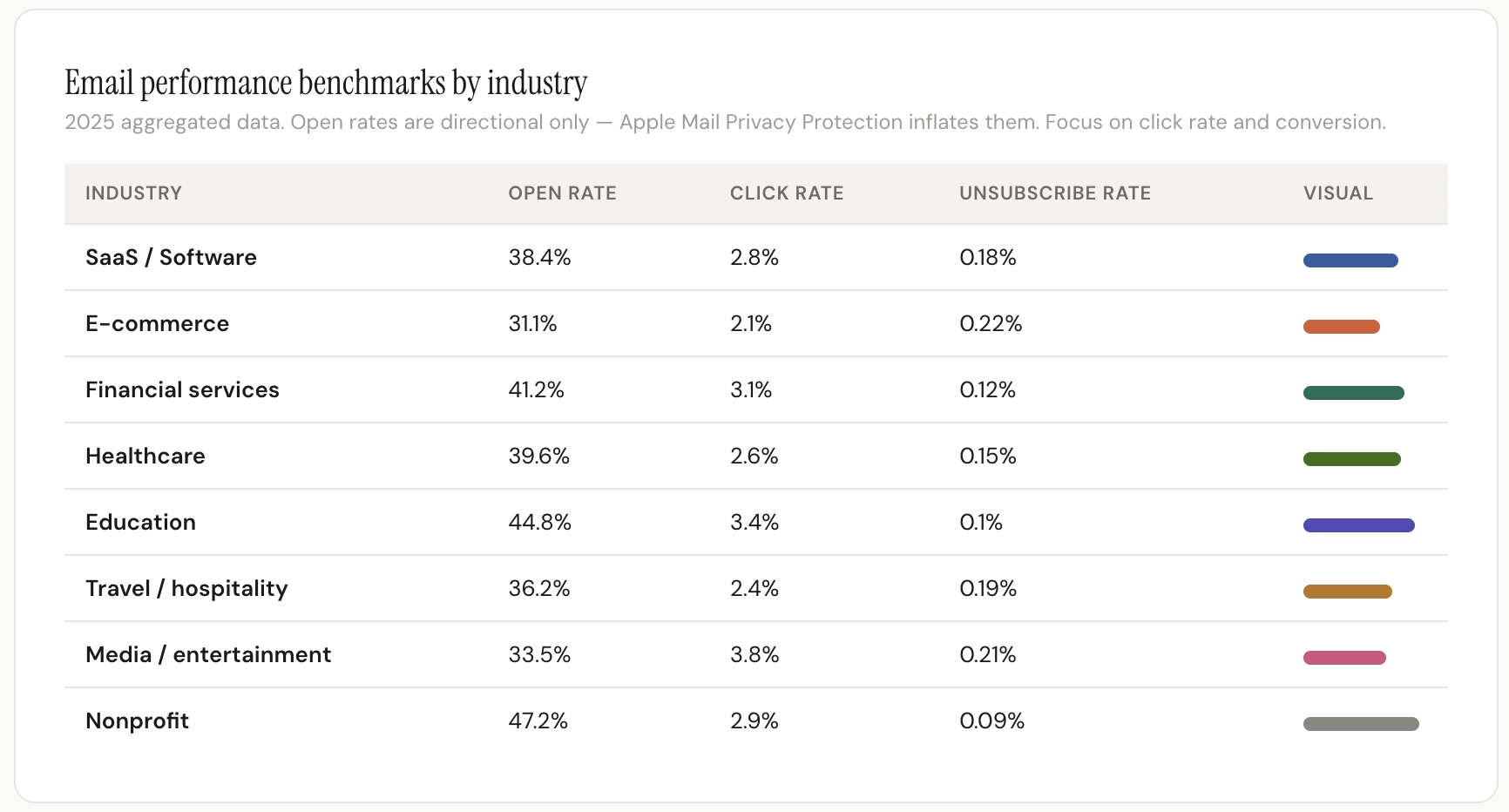
Legal and compliance review. AI doesn't understand the nuances of promotional claims, especially in regulated industries like financial services, healthcare, or supplements. Every AI-generated email that makes product claims needs human compliance review.
Crisis sensitivity. AI has no awareness of cultural context, breaking news, or social sensitivity. A pre-scheduled promotional email that goes out during a natural disaster or cultural crisis can cause brand damage that no algorithm can foresee.
Data quality oversight. AI amplifies the quality of your data — both good and bad. If your CRM contains duplicate records, incorrect segmentation tags, or outdated information, AI will confidently make wrong decisions based on that data. Regular data audits remain a human responsibility.
The practical framework: Use AI to generate, predict, and optimize. Use humans to review, decide, and quality-control. The best-performing teams in 2026 aren't replacing marketers with AI (see how real teams rate their tools) — they're giving each marketer the leverage to do the work of three.
Real Performance Improvements From AI Usage
Let's look at what the data actually shows about AI's impact on email marketing performance:
Revenue impact: Organizations investing in AI for marketing report sales ROI uplifts, with automated emails generating dramatically more revenue than manual campaigns. Klaviyo's 2026 data shows automated flows producing nearly 41% of total email revenue from just 5.3% of sends — roughly 18 times more revenue per send than scheduled campaigns.
Engagement metrics: AI-generated subject lines are improving open rates measurably, though the magnitude depends on your starting baseline. The more generic your current subject lines, the bigger the lift. Click-to-conversion rates have also jumped significantly year over year, suggesting that the people AI-optimized emails reach are more likely to buy.
Efficiency gains: The primary win for most teams isn't a single dramatic metric improvement — it's time savings. Generating ten subject line variants in thirty seconds instead of an hour. Building behavioral segments with a natural language description instead of manually configuring filters. Setting up predictive send times instead of guessing.
The compounding effect: Marketing automation delivers strong returns over time, with analysis showing positive ROI within the first year for most implementations. The returns compound because automation generates better data, which improves targeting, which increases engagement, which generates even better data.
What the data doesn't show: Most published statistics come from platform vendors with an incentive to highlight the best results. Real-world performance varies enormously based on list quality, industry, content quality, and implementation sophistication. A 13% click-through rate improvement is a realistic median, not a guarantee.
Privacy and Data Concerns: The Elephant in the Inbox
AI email marketing creates genuine privacy tensions that responsible marketers need to navigate.
The core tension: AI personalization gets better with more data. Privacy regulations demand less data collection, shorter retention, and more explicit consent. These forces pull in opposite directions, and the regulatory environment is only tightening.
GDPR in 2026: The EU's enforcement trajectory is aggressive. Cumulative GDPR fines since 2018 have surpassed €5.88 billion across over 2,200 penalties. The EU AI Act becomes fully applicable by August 2026, creating dual obligations for AI systems that process personal data. Organizations deploying AI-powered email personalization tools need to ensure they have valid legal basis for the data processing, conduct Data Protection Impact Assessments, maintain human oversight for automated decisions, and verify that any third-party AI models they use were trained on lawfully obtained data.
The specific risk with AI email tools: When you use an AI-powered email platform, subscriber data — names, purchase histories, behavioral signals — flows to the platform's servers for processing. If that platform uses a third-party AI provider, the data may cross additional organizational and geographic boundaries. Each transfer creates GDPR compliance risk, particularly if proper Data Processing Agreements aren't in place.
Practical compliance steps:
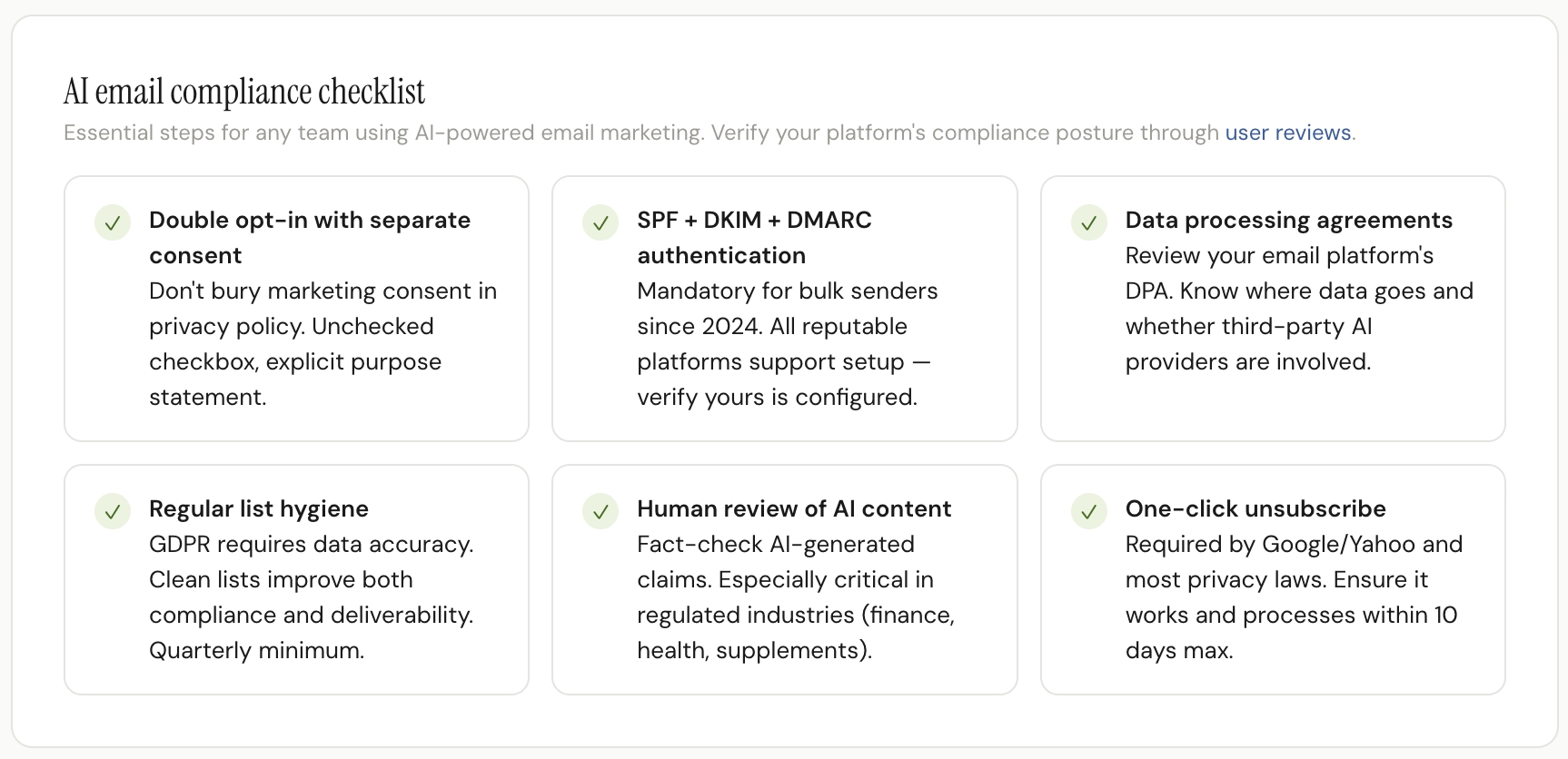
- Use double opt-in with a separate, unchecked marketing consent checkbox. Don't bury marketing consent inside your privacy policy.
- Understand the difference between consent for email marketing and consent for tracking. Some EU regulators are moving toward requiring separate consent for tracking pixel deployment.
- If you sell to EU audiences, follow GDPR as your baseline standard even if your business is based elsewhere.
- Review your email platform's data processing practices. Know where subscriber data goes, whether it's used for AI model training, and what Data Processing Agreements are in place.
- Maintain clean, accurate lists. GDPR requires data accuracy, and regular list hygiene protects both compliance and deliverability.
US privacy landscape: Nearly 20 US states now have active privacy legislation. The California Privacy Rights Act (CPRA) is increasing scrutiny of automated decision-making. The US Department of Justice has issued rules restricting transfers of sensitive personal data to certain countries. Email marketers operating across state lines need to track an increasingly fragmented compliance landscape.
The practical approach: Don't treat privacy compliance as a legal checkbox. Treat it as a deliverability and trust strategy. Compliant lists are higher-quality lists. Permission-based sending produces better engagement. Transparent data practices build subscriber trust. Privacy and performance are aligned, not opposed.
Choosing the Right AI Email Marketing Tool: A Decision Framework
Rather than ranking platforms (which invariably depends on your specific situation), here's a framework for matching your needs to the right tool:
If you run an e-commerce store: Klaviyo or Omnisend. (Compare more e-commerce tools on UseReviews.) Their AI understands product catalogs, purchase behavior, and customer lifetime value in ways that general-purpose platforms don't match. Klaviyo for sophisticated retention marketing, Omnisend for Shopify-native simplicity.
If you need powerful automation on a budget: ActiveCampaign. (See marketing automation tool reviews for alternatives.) Its visual workflow builder remains the most capable in the industry, and Active Intelligence adds genuine AI value on top of already-excellent automation. The pricing has increased in 2026 but still offers strong value for what you get.
If you want an all-in-one platform with transparent pricing: Brevo. (Read more marketing tool comparisons on UseReviews.) Charges by emails sent rather than contacts, which saves money at scale. The Aura AI agent, predictive sending, and multi-channel capabilities (email, SMS, WhatsApp) make it a strong all-in-one choice, especially for SMBs.
If you want end-to-end AI campaign generation: GetResponse. Its AI can generate entire campaigns — landing pages, email sequences, and newsletters — from a few prompts. The output needs human refinement, but as a starting point for teams without dedicated copywriters, it's the most ambitious implementation available.
If you're a small business wanting simplicity: Constant Contact offers ease of use and phone support on every plan. But be aware you're paying premium prices for a feature set that competitors offer for less. Mailchimp is a reasonable alternative with a gentler learning curve and stronger AI features at lower price points.
If you run high-volume cold outreach: Instantly for infrastructure and deliverability at scale, or dedicated sales engagement platforms like Salesloft for enterprise outbound. These tools serve different needs than marketing email platforms.
If content quality is your bottleneck: Jasper or a direct ChatGPT/Claude workflow. Dedicated AI writing tools still produce higher-quality copy than any email platform's built-in AI. Use them for creation, then paste into your sending platform.
What's Coming Next: AI Email Marketing Beyond 2026
The trajectory is clear, even if the timeline is uncertain:
Per-recipient intelligence. The shift from segment-level targeting to individual-level adaptation will continue. Instead of sending one campaign to a segment, AI will create subtly different versions for each recipient — different angles, different offers, different lengths — based on their individual engagement patterns.
Cross-channel orchestration. Email won't exist in isolation. AI will orchestrate the sequence across email, SMS, push notifications, and messaging apps, deciding not just what to send but which channel to use for each contact at each moment.
Real-time adaptive content. Emails that change based on when they're opened — showing different products based on current inventory, adjusting offers based on real-time pricing, or surfacing content based on the recipient's current location.
Deeper integration with CRMs and product data. As AI agents become more capable, the line between "email marketing platform" and "autonomous marketing assistant" will blur. The tools that win will be those that can access and act on data across the entire customer stack, not just the email channel.
The consistent pattern across all of these developments: AI will handle more of the execution, freeing marketers to focus on strategy, creativity, and judgment. The tools are getting smarter. The need for smart humans using them isn't going away.
For ongoing review intelligence on these platforms and personalized tool recommendations, visit UseReviews.io.